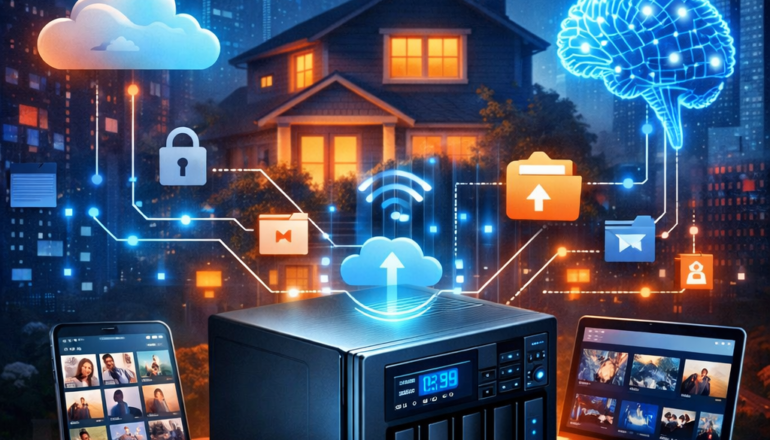
We’re living in a time where data is everywhere. Every photo we take, every message we send, every movie we stream, and every file we create generates digital information. Traditionally, large enterprises and tech giants have relied on massive server infrastructures to store and manage this data. But today, ordinary individuals are producing just as much digital content — only it’s scattered across devices, apps, and cloud platforms.
From smartphones and laptops to smart TVs and IoT devices, our personal data is distributed and often disorganized. Photos sit in cloud drives, documents are saved on different computers, media files are stored on external hard disks, and backups are sometimes neglected entirely. This digital clutter creates not only inefficiency but also dependency on third-party services.
A home server offers a practical solution.
By setting up a centralized storage system within your own network, you can consolidate your digital life into one secure location. A home server can function as a personal cloud, media server, backup solution, and even a development or testing environment. Instead of relying entirely on external cloud providers, you gain control over your data, privacy, and storage capacity.
In the age of artificial intelligence, personal infrastructure is becoming even more relevant. Home servers can support local AI tools, automation systems, and private data processing, allowing individuals to experiment and innovate without sending sensitive information to external servers.
While not everyone may need advanced infrastructure, those who value privacy, data ownership, and technological independence can greatly benefit from it. As digital content continues to grow exponentially, owning a home server is no longer just a hobby for enthusiasts — it is quickly becoming a practical step toward managing and protecting our digital lives.